System 04 · GROUND
Fireground Reconnaissance & Suppression Robot
It enters high-temperature, smoke-filled, toxic, or potentially explosive areas to collect imagery, thermal information, and environmental conditions remotely. It also reserves an interface for compliant water, foam, or other suppression equipment.
Fireground ReconnaissanceMulti-angle product view
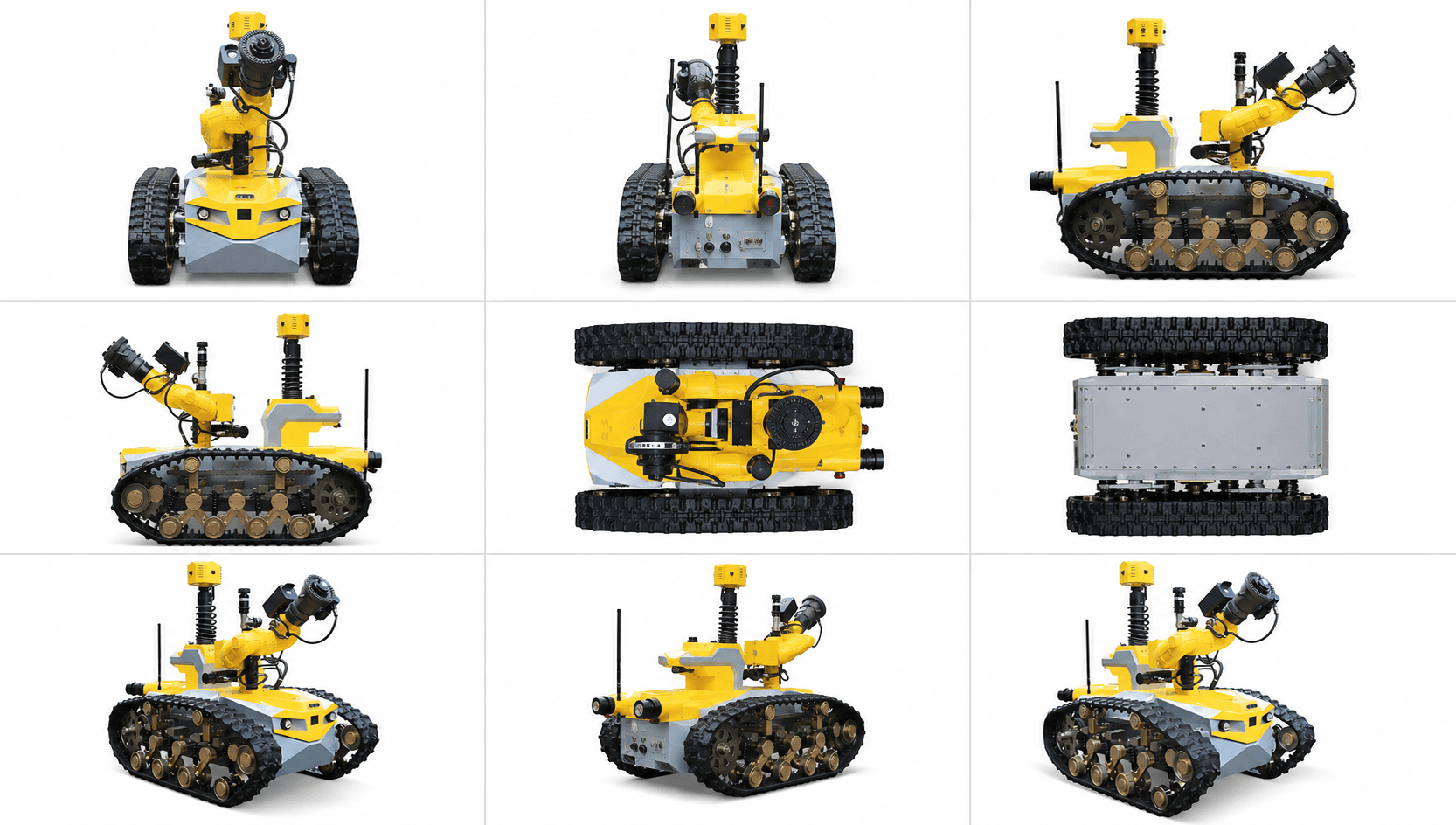
Tracked chassis, mounted suppression monitor, sensing assemblies, and mast-mounted component shown from multiple angles.
Operational value
It reduces direct responder exposure in high-risk scenes and gives commanders earlier information and remote intervention options.
Primary users
- Fire and rescue teams
- Chemical, energy, and large industrial sites
- Airports, warehouses, and high-risk facility operators
Mission roles
Capabilities organized around the operating task.
Hotspot and scene-condition observation
Interface and control for remote suppression-media delivery
Operation, alert, and mission logging
Specification framework
Define the acceptance conditions before finalizing the system.
The technical proposal translates each operating requirement into a configuration topic, supporting document, and acceptance method.
- 01Fire scenario, fuel or hazard context, and access route
- 02Camera, thermal, gas, and environmental sensing package
- 03Suppression-media interface and monitor requirements
- 04Remote control, communications, and failure procedures
- 05Inspection, acceptance testing, training, and after-sales handoff
Engineering verification
Performance and compliance follow the application.
Thermal tolerance, traction, gradeability, ingress and explosion protection, communications, flow, reach, and suppression performance require application-specific hazard review and verification.
Related systems
Extend the response architecture.
Technical project review
Define the mission before the machine.
Share the operating environment, required task, hazards, documentation, quantity, and acceptance plan for a structured configuration review.
Prepare an enquiry